
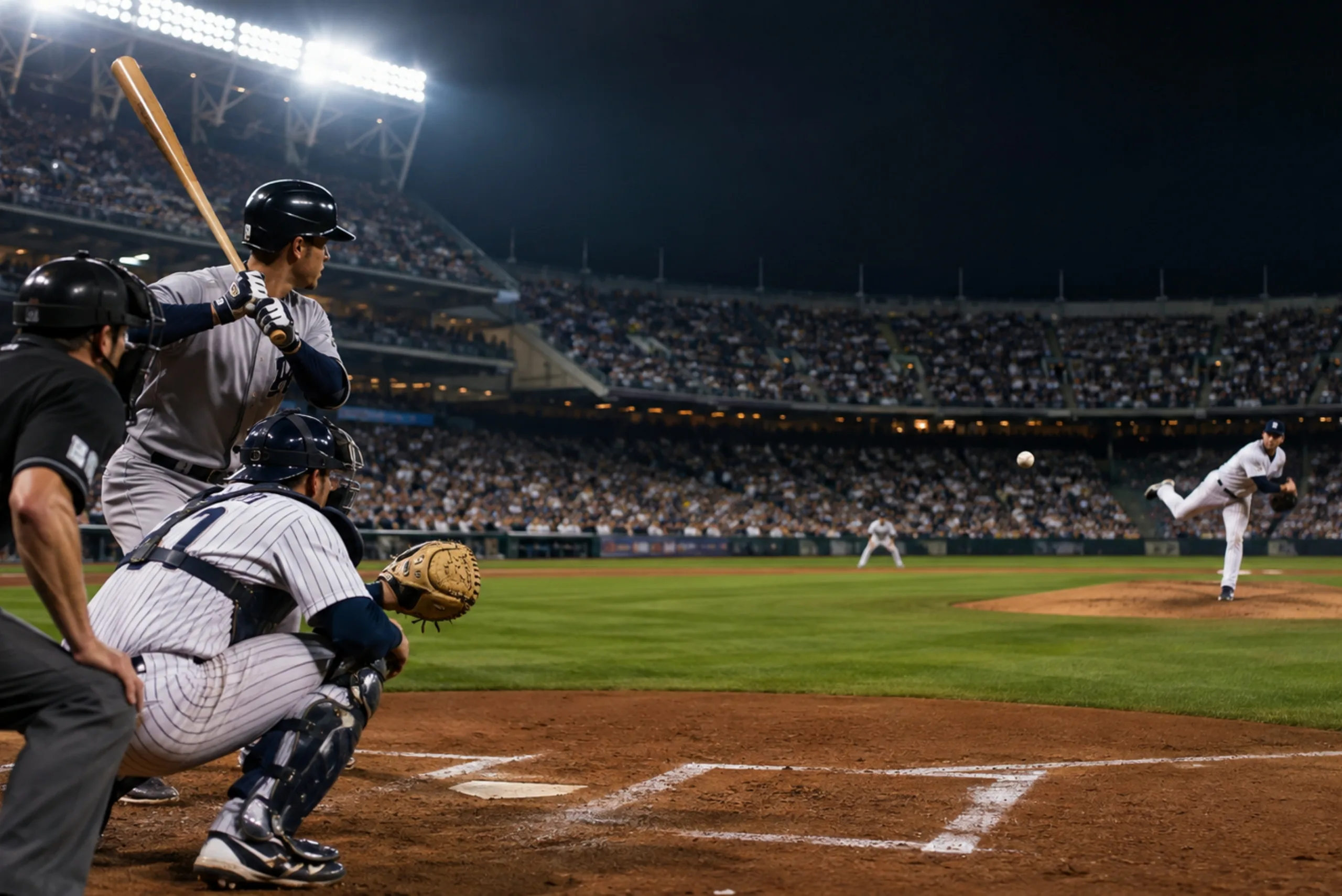
Underdog MLB pick’em strips baseball down to one repeatable decision: will a player finish higher or lower than the stat line Underdog projects for that day? You build an entry of two to five players, call each one over or under, and win based on how many land. The format looks simple, and that surface simplicity is exactly why most players lose money at it.
The edge in Underdog MLB is not picking players you like. It is finding the projections Underdog set slightly wrong and betting the gap before the number corrects. Smart Bet Insider tracks daily fantasy formats and the strategy that holds up across a full season. The sections below cover the rules, how the projections grade, the MLB angles worth playing, and the mistakes that quietly drain a bankroll.
How Underdog MLB Pick’em Works
Every entry starts by adding two to five players and choosing Higher or Lower on each projection. A standard entry demands that every pick hits, and the payout climbs with each player you add, reaching as much as 20x on a perfect five-pick slip. Miss one leg on a standard entry and the whole thing loses.
Underdog also sells insured entries, branded as Flex, that pay a reduced amount even when a pick or two misses. A five-pick Flex still returns money on four correct, and sometimes three, at lower multipliers than the standard version. That insurance is the single most important lever you control, and choosing between standard and Flex is a strategy decision, not a formality.
Rivals rounds out the MLB menu by pitting two players head to head, asking which one beats a combined line rather than a solo projection. It rewards the same skill as pick’em, reading a matchup, applied to a direct comparison.
What the Projections Actually Measure
The projection is only useful if you know exactly how it grades. Underdog’s MLB scoring rules count strikeouts recorded as a pitcher only, so a batter’s strikeouts never touch a pitching line. Singles count singles alone, with doubles, triples, and home runs excluded from that specific stat.
Grading also hinges on whether a player takes the field. A pitcher must throw at least one pitch for any pitching projection to settle, and a two-way player who bats but never pitches sees his pitching lines void while his hitting lines grade normally. Reading these rules before you build is the difference between a confident pick and a voided leg you did not see coming.
The MLB Angles Worth Playing
Baseball rewards bettors who chase the same predictable stats every night rather than hunting for hero picks. The angles below hold up across a long season.
Pitcher strikeouts. The most projectable market on the board. Target a strikeout-heavy starter against a lineup that whiffs often in a pitcher-friendly park, and confirm the underlying rate with swinging-strike and strikeout percentage rather than raw totals.
Total bases and hits. The cleanest hitter angle leans on the platoon edge. A strong hitter facing an opposite-handed pitcher, in good recent form, is the textbook Higher on total bases, since the matchup and the form point the same direction.
Park and weather. Wind, heat, and humidity move run environments more than casual players expect. A hot day with wind blowing out lifts power and hitter lines, while a cold, still night favors pitchers and Unders.
Confirmed lineups. No angle survives a scratch. Wait for posted lineups before locking hitter picks, because a star resting or dropping in the order guts a projection you built hours earlier.
Standard vs. Flex: Choosing Your Entry
The entry type decides how much risk you are actually taking. A standard entry needs every leg, so it fits nights when two or three picks clear their lines by a comfortable margin and recent form backs each one. Fewer picks with real edge beat a five-pick slip built on two coin flips.
Flex earns its lower multiplier when you want a fourth or fifth pick you like but cannot fully trust. The insurance absorbs a single miss and keeps the entry alive, which turns a marginal leg from a slip-killer into tolerable variance. Match the entry type to your conviction, not to the bigger advertised payout.
The Part Most Bettors Get Wrong
Underdog’s payouts are built to sell the big multi-pick slip, and chasing that 20x is the fastest way to zero a balance. A five-leg standard entry needs every pick to hit, and stacking five 55% calls leaves you a heavy underdog on the entry even when each individual pick is sound. Two and three-pick entries win far more often.
Discipline matters more in baseball than in most sports because a full slate offers a new game every half hour. The urge to fire a fresh entry after a late-inning bad beat, or to bet a pitcher before lineups post, is where bankrolls leak. Not every projection is a soft one, and passing on a night with no clear edge is itself a winning play.
Building a Repeatable MLB Approach for 2026
A winning Underdog MLB approach rests on three habits. Bet the projectable stats, strikeouts and total bases, where your read can actually beat the line. Match your entry type to your conviction, leaning standard on high-confidence nights and Flex when you need insurance. Wait for confirmed lineups before you lock a single hitter.
The players who profit on Underdog are not the ones building the flashiest five-pick slips. They are the ones who treat each projection as a number to be beaten, pass when the board offers nothing soft, and let the predictable stats carry them across a long season. Smart Bet Insider covers daily fantasy strategy, MLB projections, and the discipline behind them all season. Check the analysis before you build your next entry.
Frequently Asked Questions
How does Underdog MLB pick’em work?
Underdog MLB pick’em asks you to choose whether each player will finish higher or lower than a projected stat line for that day’s games. You build an entry of two to five players and win based on how many picks land. A standard entry requires every pick to hit, while a Flex entry pays a reduced amount even if one or two miss.
What are the best MLB stats to pick on Underdog?
Pitcher strikeouts and hitter total bases are the most projectable MLB markets and the best starting point. Strikeout props reward targeting a high-strikeout pitcher against a lineup that whiffs often in a favorable park. Total bases reward hitters with a platoon edge against an opposite-handed pitcher, ideally in good recent form.
How much can you win on Underdog MLB pick’em?
A perfect five-pick standard entry can pay as much as 20x your entry fee, with payouts scaling up as you add more correct picks. Flex entries pay less at the top end but return money even when a pick or two misses. The larger the slip, the higher the potential payout and the lower your real chance of hitting every leg.
What happens to my pick if a player does not play?
A pitcher must throw at least one pitch for his pitching projection to grade, and if he never appears, that line voids rather than losing. For a two-way player who bats but does not pitch, the pitching projections void while the batting projections grade normally. This is why waiting for confirmed lineups before locking hitter picks protects your entry.
Is Underdog standard or Flex better for beginners?
Flex is generally the safer starting point because its insurance pays out even when a pick or two misses, softening the variance while you learn. Standard entries offer higher payouts but demand a perfect slip, which punishes a single bad read. Beginners tend to do better with two or three-pick entries on Flex until their pick accuracy is proven.