
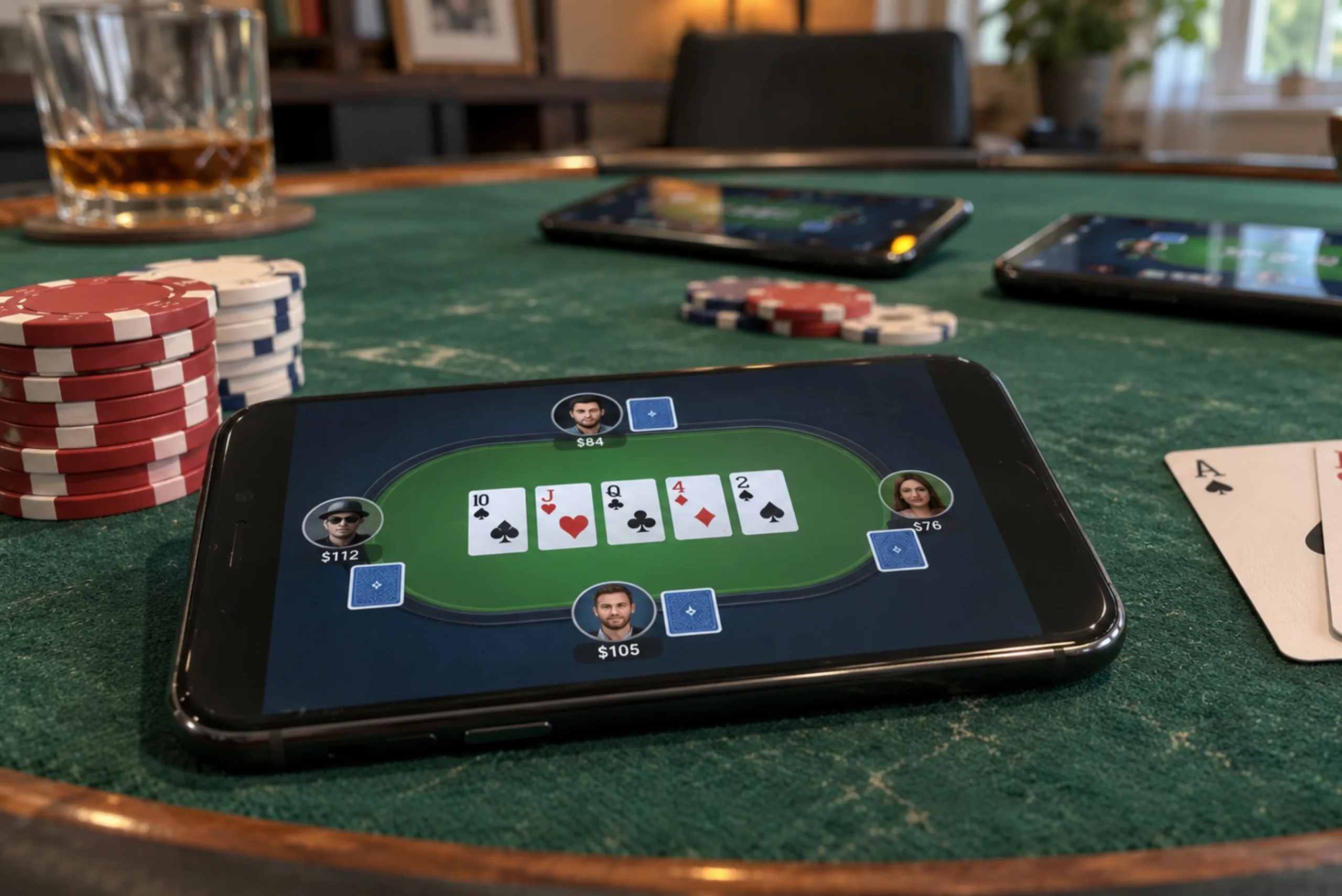
Club-based poker has quietly become the dominant way millions of players get their game in, and the four names that come up most often are PokerBros, ClubGG, Suprema, and X-Poker. Each one uses the same basic model — private clubs, an agent-run economy, and app-based tables — but the traffic, cost structure, and player pools behind each platform differ enough that picking the wrong one can genuinely hurt your bottom line.
Smart Bet Insider compares club poker platforms the same way it evaluates sportsbook legislation — by looking past the marketing screenshots to the mechanics that actually decide whether a platform is worth your time. This guide breaks down how PokerBros, ClubGG, Suprema, and X-Poker differ on cost, traffic, game variety, and risk, so you can match the app to the way you actually play.
Meet the Four Contenders
ClubGG, a GGPoker spin-off, delivers a sleek experience with tools like multi-table play and detailed stats, while PokerBros emphasizes customization, unique game modes like Bomb Pot and Kill Pot, and a vibrant global club scene. PokerBros in particular offers the largest liquidity network in many regions, making it attractive for volume grinders provided clubs and unions are carefully vetted.
Suprema and X-Poker round out the field with more regionally focused footprints. Suprema is a GLI-certified platform built for recreational and experienced players, letting users create a private club and choose from styles including Texas Hold’em, Omaha, and Open Face Chinese. X-Poker, meanwhile, markets itself as an easy way to start an online home game, spanning Texas Hold’em, Pot Limit Omaha in several variants, and Open Face Chinese Poker.
Cost and Club Structure Compared
This is where the four platforms genuinely split apart. X-Poker offers the lowest entry point at roughly $10 for a Level 1 club supporting 60 members, while PokerBros club fees for renewal run between 1,000–1,300 diamonds, or $20–26 a month, for the Level 1 or Level 2 clubs most owners use. ClubGG breaks from the diamond model entirely and bills $9.99 or $49.99 a month as a straight subscription.
That subscription model changes who actually pays. ClubGG’s subscription shifts cost to the player rather than the club — you’re not paying for the club license, but players pay for access to tournaments and premium features. Suprema follows a diamond-purchase model closer to PokerBros, letting clubs grow and then buy diamonds to unlock features as needed.
| Platform | Cost Model | Typical Entry Point |
| PokerBros | Diamond-based club fees | $20–26/month (Level 1–2) |
| ClubGG | Player subscription | $9.99–$49.99/month |
| Suprema | Diamond-based, GLI-certified | Variable by club tier |
| X-Poker | Diamond-based | ~$10 for a starter club |
Traffic, Game Variety, and Player Pools
Traffic is arguably the single biggest factor in whether a club app is worth playing, and it varies by time zone as much as by platform. ClubGG is the platform with the most clubs and unions overall, and its traffic tends to pick up several hours later in the day, nearly doubling its offerings. PokerBros is primarily a USA-based platform with action loading later in the day, but it runs much busier and safer than X-Poker overall, with large unions and plenty of ring game, MTT, and Spin/SNG variety.
Game-type strength also splits by stakes. PPPoker and ClubGG generally offer more action at mid-to-high stakes, while PokerBROS and similar apps tend to be stronger at lower stakes. X-Poker and Suprema, by contrast, lean into specific regional pools — X-Poker with a strong Asian footprint and Suprema anchored heavily to the Brazilian market, which shapes both their traffic patterns and their currency structures.
Security, Fairness, and the Agent Risk Every Platform Shares
All four platforms share the same underlying structural risk: the app itself isn’t where your money lives. Unlike traditional poker rooms where you deposit directly to the platform, club apps rely on hosts and agents who handle deposits and withdrawals off-platform, usually via crypto or e-wallets, with each club setting its own rules around moderation. That means the software can be excellent while your actual experience still hinges entirely on the agent you’re dealing with.
On the fairness side, the platforms differentiate more clearly. ClubGG benefits from GGPoker’s security infrastructure extending partially into the app, which also means a somewhat higher detection risk for third-party tools. Suprema holds GLI certification, a standard fairness and integrity credential, while ClubGG runs on BMM-certified RNG technology inherited from the GGPoker ecosystem. Neither PokerBros nor X-Poker markets an equivalent independent certification as prominently, which is worth weighing if third-party fairness verification matters to you.
Compare the Trust Architecture, Not Just the Apps
The more useful question when comparing these platforms isn’t simply which app has the best features — it’s how the chain of trust is structured around the player. A platform provides the software, but unions, clubs, and agents can control important parts of the actual experience, which matters because the entity handling your account or funds may not be the same organization that built the underlying technology.
| Layer | What to Investigate |
| Platform | Software, account rules, security and integrity systems |
| Union | Player pool, games, tournaments, oversight |
| Club | Membership, rake, limits, table availability |
| Agent | Onboarding, support, deposits and withdrawals |
| Player | Who ultimately bears the financial risk? |
That creates a chain of trust running platform → union → club → agent → player, and the more layers involved, the more it matters who’s responsible when something goes wrong. It’s worth taking that seriously: the FBI warns that illegal or unregulated online gaming can expose players to fraud and financial losses, while the FTC recommends checking who is responsible for resolving problems and what protections apply before sending money anywhere online.
Before joining a club on PokerBros, ClubGG, Suprema, or X-Poker, identify who holds the account relationship, who controls the funds, who handles withdrawals, and where disputes get escalated. The key question is how many intermediaries stand between you and the game, and what responsibility each one actually carries — a lens that reveals differences an app-by-app feature comparison misses entirely.
Which App Actually Fits Your Game
If you value structure, analytics, and a recognizable brand behind the software, ClubGG is best suited for players who prioritize structured clubs, built-in analytics, and stronger anti-bot enforcement. If volume and table availability matter more than polish, PokerBros’ liquidity advantage is hard to match — provided you’re willing to vet the union or club you join rather than accepting the first invite.
For regionally focused play, the calculus is simpler. Suprema is the stronger fit if your target market is Brazil or Latin America broadly, given its GLI certification and reais-anchored economy, while X-Poker’s lower buy-in and Asian-market traffic make it the pick for players chasing a cheaper club to run or a pool concentrated in that region. None of these choices is universally “best” — they’re optimized for different traffic patterns, price sensitivities, and levels of oversight.
Do the Homework Before You Commit a Club ID
The comparison above covers the platforms themselves, but the decision that actually affects your bankroll happens one level down — at the specific club and agent you choose within whichever app you pick. The safety of any real value in these clubs is determined by the agents running them, not by the platform itself, and the app has no obligation to intervene if an agent fails to pay out. That’s true across PokerBros, ClubGG, Suprema, and X-Poker alike — the software differs, but the agent risk doesn’t disappear on any of them.
This is precisely the research Smart Bet Insider does before recommending any club-based poker platform — checking agent track records, union structures, and payout reliability rather than just app store ratings. Before you commit real value to any club on any of these four platforms, it’s worth confirming that groundwork has already been done for you rather than learning the hard way.
Four Apps, One Rule: The Platform Isn’t the Risk — The Agent Is
PokerBros, ClubGG, Suprema, and X-Poker each solve the same problem — bringing private, agent-run poker to a phone — but they solve it with different economics, different traffic patterns, and different regional strengths. ClubGG wins on polish and brand trust, PokerBros wins on raw liquidity, Suprema wins on Brazilian-market certification, and X-Poker wins on affordability and Asian-market reach. None of them wins on eliminating the one risk that actually matters: the number of intermediaries standing between you and your chips.
Choosing the right app is only step one. Mapping the trust chain — platform, union, club, agent — is the step that determines whether your poker experience is smooth or a headache. Keep checking Smart Bet Insider as club rosters, union structures, and platform terms shift throughout 2026 — the landscape moves fast enough that last month’s safe pick isn’t guaranteed to still be one today.
FAQs
Which club poker app has the most traffic overall?
ClubGG currently runs the most clubs and unions of the four platforms, with traffic that roughly doubles several hours into the day. PokerBros trails closely in raw liquidity, particularly in North American time zones where its player base is concentrated.
Is PokerBros or ClubGG cheaper to run a club on?
ClubGG uses a flat subscription model at $9.99 or $49.99 a month billed to the player, while PokerBros charges the club owner 1,000–1,300 diamonds, roughly $20–26 monthly, for the tiers most owners use. Which is “cheaper” depends on whether you’re the club operator or the player footing the membership cost.
Is X-Poker a good option for beginners?
X-Poker offers one of the lowest club setup costs of the four platforms, at roughly $10 for a starter club, making it an accessible entry point for new club owners. Its traffic leans heavily toward Asian markets, so beginners outside that region may find thinner game selection at off-peak hours.
Does Suprema require KYC or identity verification?
Suprema operates as a GLI-certified platform focused on recreational and experienced players, primarily serving the Brazilian and broader Latin American markets. As with the other club apps, verification requirements vary by the specific club and agent rather than being standardized platform-wide.
Which app is safest from a security standpoint?
ClubGG benefits from GGPoker’s security infrastructure and BMM-certified RNG, while Suprema carries GLI certification for game fairness. That said, software security doesn’t cover agent risk — on all four platforms, the safety of real money tied to your club depends on the agent and the number of intermediaries between you and them, not just the app.
Can I use the same account across PokerBros, ClubGG, Suprema, and X-Poker?
No. Each platform operates independently with its own accounts, club structures, and player pools, even where underlying technology is shared with a parent brand. You’ll need a separate account and separate club memberships for each app you choose to play on.
How do I know if a club or agent is trustworthy before joining?
Map the full trust chain — platform, union, club, and agent — and confirm who holds your account relationship, who controls funds, and where disputes are escalated before sending anything. Cross-checking that chain against an independent tracker like Smart Bet Insider, alongside general guidance from resources like the FTC on verifying who’s responsible when problems arise, is the safest way to avoid the layered risk every one of these platforms shares.