

An NRFI cheat sheet is a quick checklist for spotting when a scoreless first inning is more likely than the odds suggest. NRFI stands for No Run First Inning, a bet that neither team scores in the opening frame, settled within the first six outs. It resolves in 15 to 20 minutes, which is half its appeal, but a fast bet is not the same as an easy one. The edge lives in the matchups the market misprices, not the obvious ones.
Finding that edge takes a repeatable read of pitchers, lineups, and conditions, plus the discipline to skip most games. Smart Bet Insider covers prop markets and the data that actually moves them. The sections below give you the stats that matter, the traps that drain bankrolls, and the math that decides whether a price is worth taking.
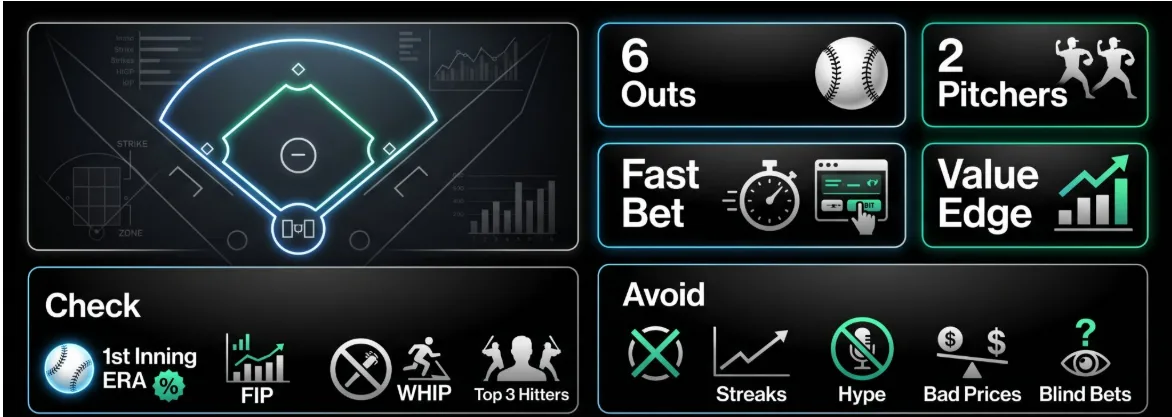
The Stats That Actually Predict a Scoreless First
First-inning ERA (Earned Run Average) beats season ERA every time for this bet. A starter with a 3.00 overall ERA can carry a 4.50 first-inning ERA because he faces the top of the order cold and needs a frame to settle. Pull the first-inning split before you trust the name on the jersey.
FIP is the single strongest predictor worth knowing. Fielding Independent Pitching isolates what a pitcher controls, strikeouts, walks, hit by pitches, and home runs, and it tracks first-inning scoring better than any other metric at roughly 0.31 year to year. A low FIP paired with a high strikeout rate is the core NRFI profile, since whiffs keep runners out of scoring position.
First-inning WHIP fills in the rest. A first-inning WHIP above 1.30 means a pitcher regularly puts a runner on early, and baserunners are what turn into runs. Walk rate matters most here, because a leadoff walk sets up a rally before a single out records.
Why NRFI Is a Two-Sided Bet
A scoreless first needs both starters to hold, so one ace is never enough. The best pitcher in baseball paired with a first-inning liability on the other side is a weak NRFI play, no matter how good the name. Check both halves of the inning with equal weight.
The lineup half decides as much as the arm. Only the first three hitters are guaranteed to bat in the opening frame, so their on-base skill is what threatens the bet. A patient top of the order that works counts and draws walks raises first-inning scoring even against a strong starter.
The ideal NRFI spot pairs a quietly good pitcher with a top-heavy lineup that is slumping. A slumping offense full of sluggers still draws juiced YRFI prices, which is exactly where the scoreless side can offer value the market overlooked.
The Traps That Drain NRFI Bankrolls
Streaks are the biggest trap, and most cheat sheets sell them as a feature. A pitcher who has gone NRFI in eight straight starts is not more likely to do it again tonight, because each game is independent. The streak only tells you he is good, and his skill is already baked into the price.
The ace-versus-ace game is the second trap. Casual bettors see two stars and take NRFI, so books juice those matchups to -160 or higher. Laying that much price erases the edge even when the scoreless first is genuinely likely. The value sits in the games nobody is excited about.
The solo home run is the trap you cannot model away. One swing on the first pitch busts the bet regardless of how clean the read was. NRFI carries real variance over six outs, which is why selectivity and small stakes matter more than any single play.
The Math That Tells You When to Bet
NRFI prices live in juice, so the win rate you need is higher than it looks. At -150 odds, you have to win 60% of your bets just to break even, and a typical NRFI line runs -130 to -170. Hitting scoreless innings at random will not clear that bar.
Value means your estimated probability beats the implied odds. If you read a game as 60% to stay scoreless and a book offers -130, the implied probability is about 56.5%, leaving a 3.5% edge worth taking. Anything tighter is not worth the variance.
Line shopping turns thin edges into real ones. One book might post NRFI at -125 while another sits at -140 on the same game, and a 15-cent swing in juice can flip a bet from positive to negative value. Smart Bet Insider tracks the markets and the pricing gaps that decide these bets. Compare the number against your own read before you lay the juice, and keep stakes to a small share of your bankroll.
Frequently Asked Questions
What does NRFI mean in betting?
NRFI stands for No Run First Inning, a bet that neither team scores in the opening inning of a baseball game. It settles after the first six outs, win or lose, usually within 15 to 20 minutes of first pitch. The opposite side is YRFI, or Yes Run First Inning.
What is the most important stat for NRFI betting?
First-inning ERA is the most important stat, because many pitchers perform very differently in the opening frame than over a full game. FIP is the strongest underlying predictor of first-inning scoring, since it isolates strikeouts, walks, hit by pitches, and home runs. First-inning WHIP and strikeout rate round out the core read.
Are NRFI streaks worth betting on?
NRFI streaks are not predictive, because each game is statistically independent of the last. A pitcher who has gone scoreless in eight straight first innings is demonstrating skill that the odds already reflect, not building momentum. Chasing the streak means paying a juiced price for information the market has priced in.
What odds do NRFI bets usually have?
NRFI bets typically price between -130 and -170, since a scoreless first hits in roughly 55% to 60% of games. At -150, you need to win about 60% of your bets just to break even. Ace-versus-ace matchups often get juiced to -160 or higher, which usually erases the value.
Is NRFI or YRFI the better bet?
Neither side is inherently better, because the question is always whether the price beats the true probability. NRFI hits more often but requires laying juice, while YRFI hits less often and pays plus money. The edge comes from finding games the market has mispriced, not from defaulting to one side.