The headline is big: IG Group, a UK trading giant, has agreed to buy Underdog for up to $1.3 billion. For the many people who actually use Underdog Predictions, though, the more useful question is what the deal changes for them day to day. The short answer is that little changes immediately, while the deal quietly sets up a larger, broader platform over time.
Understanding the difference between what shifts now and what shifts later is the whole story here. Smart Bet Insider tracks prediction markets and the companies reshaping them. The sections below cover what the deal is, how Underdog got here, how its markets work, why IG wanted it, what changes for users now and later, and the caveats.
What the IG Group Deal Actually Is
IG Group, a FTSE 100 online trading company that also owns tastytrade, agreed on July 30, 2026 to acquire Underdog in a deal worth up to $1.3 billion. That figure includes roughly $1.1 billion upfront plus an earnout of about $200 million tied to Underdog hitting its 2026 performance targets.
Crucially, IG said it has no plans to change the Underdog brand, which will keep operating as a standalone business with its own management and platform. The transaction is expected to close in late 2026 or early 2027, pending regulatory clearance from the CFTC and antitrust approval, so it is an agreement rather than a done deal.
How Underdog Got Here
Underdog started six years ago as a daily fantasy sports operator before launching prediction markets in September 2025. The pivot was rapid, with prediction markets accounting for 54% of its handle in the first half of 2026, up from 14% the year before, which is exactly what made it attractive to IG.
The bigger technical shift came earlier in 2026. Underdog assembled a full federal license stack, then launched its own exchange on July 18, 2026, moving off the third-party rails it had rented from Kalshi and Crypto.com. It migrated existing customers onto its own prediction-market infrastructure using the same app, wallet, and identity verification.
How Underdog’s Prediction Markets Work
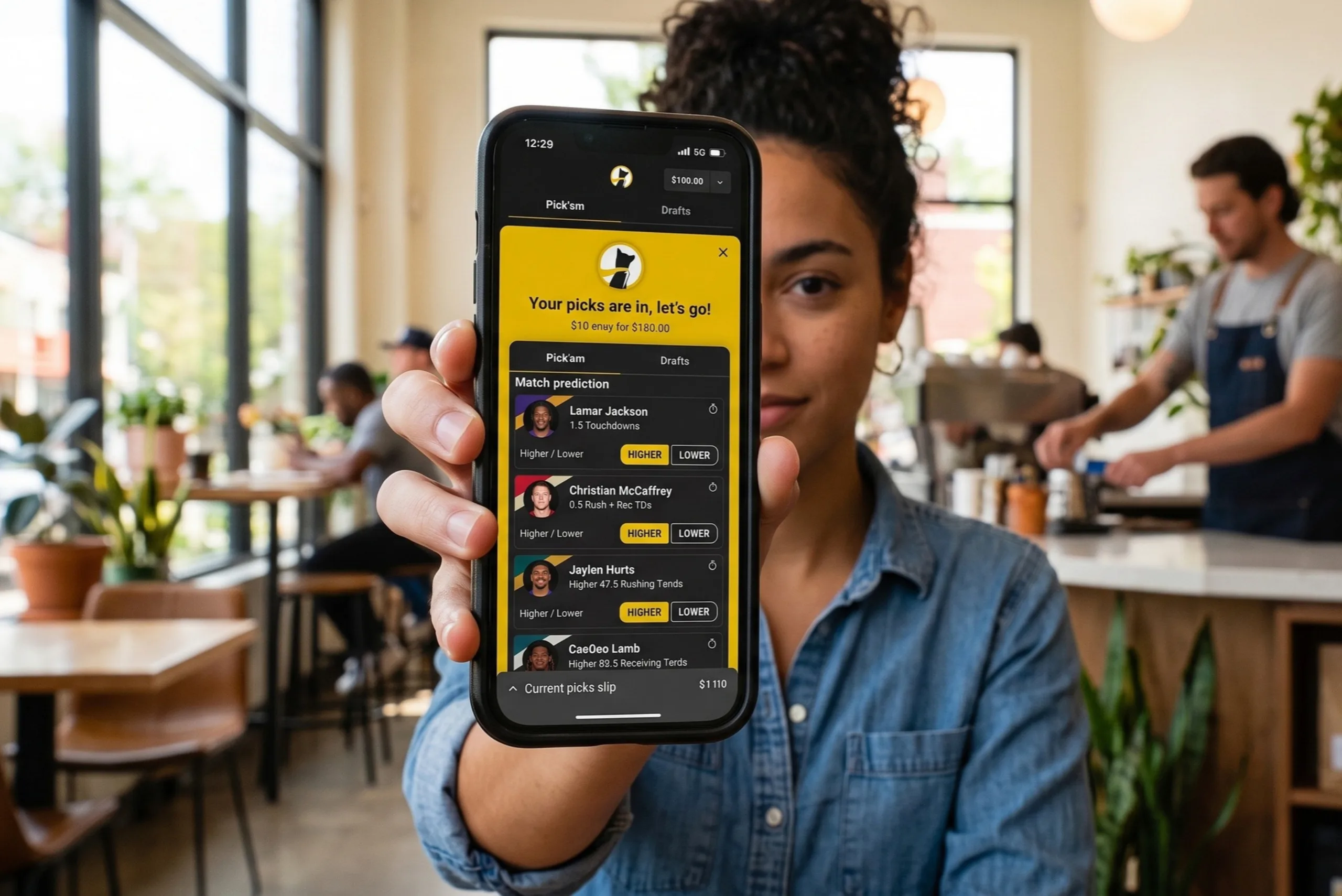
Underdog Predictions lets users trade CFTC-regulated event contracts rather than place traditional bets, with each contract settling at a fixed value based on a real-world outcome. Because the products fall under federal oversight rather than state gaming law, they reach a wider set of states than the company’s daily fantasy contests, which are governed state by state.
Running its own exchange gives Underdog control over the markets it lists and the economics behind them, instead of paying to route trades through a rival’s platform. The daily fantasy product continues alongside predictions in the same app, so existing users keep both, funded through one wallet and one verified account.
Why IG Wanted Underdog
For IG, the appeal was less about today’s earnings than tomorrow’s market. The company sizes US prediction markets as several times larger than online sports betting, and buying Underdog gave it an established platform and a full federal license stack rather than years of building one from scratch.
The demographics sealed it. More than 60% of Underdog’s monthly users are under 30, which IG expects to pull its average customer age down from about 42 to 34, while lifting the US to roughly 40% of group revenue from 22%. The overlap with tastytrade also opens a path to steer users from predictions toward active trading over time.
What Changes for Users Now
In the immediate term, very little changes for Underdog Predictions users. The brand stays the same, the app stays the same, and the account, wallet, and verification you already have carry over, since the deal has not even closed yet and needs regulatory sign-off first.
It is worth separating the two events, since the most concrete recent change for users, the move onto Underdog’s own exchange, happened before the IG deal and independently of it. The acquisition itself is a corporate ownership change rather than a product overhaul, so a typical user will not notice a difference the day it closes.
What Changes Over Time
The longer-term effects are where the deal matters for users. IG has said Underdog’s financial markets, culture and politics ambitions are on the table, since the underlying infrastructure is category-agnostic, which points to a platform that expands well beyond sports and entertainment contracts.
IG’s scale and capital should also let Underdog build and launch faster than it could alone. The parent’s ownership of tastytrade opens a potential path from prediction markets into active trading and financial derivatives, and the backing of a regulated, well-funded global company adds a layer of stability the standalone startup lacked.
The Caveats
None of this is guaranteed on any fixed timeline. The acquisition still requires regulatory approval and antitrust clearance, so completion could slip, change in scope, or face conditions, and the promised category expansion depends on the deal closing as planned.
The broader legal uncertainty around prediction markets also still applies, since sports event contracts remain contested in a number of states regardless of who owns the platform. Underdog’s daily fantasy product continues alongside the prediction markets, so users keep both, but the regulatory backdrop is the same one hanging over the whole industry.
What It Means for Underdog Users
The practical takeaway is that Underdog Predictions users should expect continuity in the near term and expansion over the longer term, assuming the deal clears. Same app and brand now, a bigger and broader platform later, backed by a company with the resources to accelerate it.
Smart Bet Insider tracks prediction markets and the companies reshaping them as consolidation accelerates. Watch for regulatory milestones as the deal moves toward completion, and treat any new markets as speculative rather than a sure thing. None of this is financial advice, and anyone trading should be of eligible age and stay within a budget they can afford to lose.
Gambling can be a sensitive subject, and if it is becoming a problem for you or someone you know, please reach out to support resources.
Frequently Asked Questions
What is the IG Group and Underdog deal?
IG Group, a UK-based FTSE 100 trading company, agreed in July 2026 to acquire Underdog, a US daily fantasy and prediction markets operator, for up to $1.3 billion. The deal includes about $1.1 billion upfront plus an earnout tied to Underdog’s 2026 performance. It is expected to close in late 2026 or early 2027, pending regulatory approval.
Will Underdog change after the IG Group acquisition?
Not immediately. IG has said Underdog will keep operating as a standalone brand with its own team and platform, so the app, account, and wallet stay the same. Over time, IG’s resources are expected to expand Underdog’s markets and product range, but the near-term experience is largely unchanged.
Does Underdog run its own prediction market exchange?
Yes. Underdog built a full federal license stack and launched its own exchange on July 18, 2026, moving off the third-party infrastructure it previously rented from Kalshi and Crypto.com. Existing customers were migrated onto that exchange using the same app, wallet, and verification. This happened before and separately from the IG deal.
What new markets could Underdog add?
IG has indicated Underdog’s infrastructure is category-agnostic and could expand beyond sports and entertainment into finance, culture, and politics over time. IG’s ownership of tastytrade also opens a potential path toward trading and financial derivatives. These additions depend on the deal closing and on regulatory conditions.
Is the Underdog acquisition final?
Not yet. The deal was announced as an agreement in July 2026 and still requires US regulatory clearance, including from the CFTC, along with antitrust approval. Completion is expected in late 2026 or early 2027, so the timeline and final terms could still shift.