
NFL betting strategy is less about picking winners than about surviving the eighteen weeks it takes to find out whether you can. The break-even point on a standard -110 spread bet is 52.38 percent, which means even a profitable bettor loses close to half the time. A season is long enough for that math to wreck anyone who sizes bets on confidence instead of process.
The bettors who finish ahead treat the season like an investment account, not a slot machine. Smart Bet Insider breaks down the habits that hold up across a full schedule and the ones that quietly drain a bankroll. The approach below is built on price and discipline, not hot takes.
The Number Matters More Than the Pick
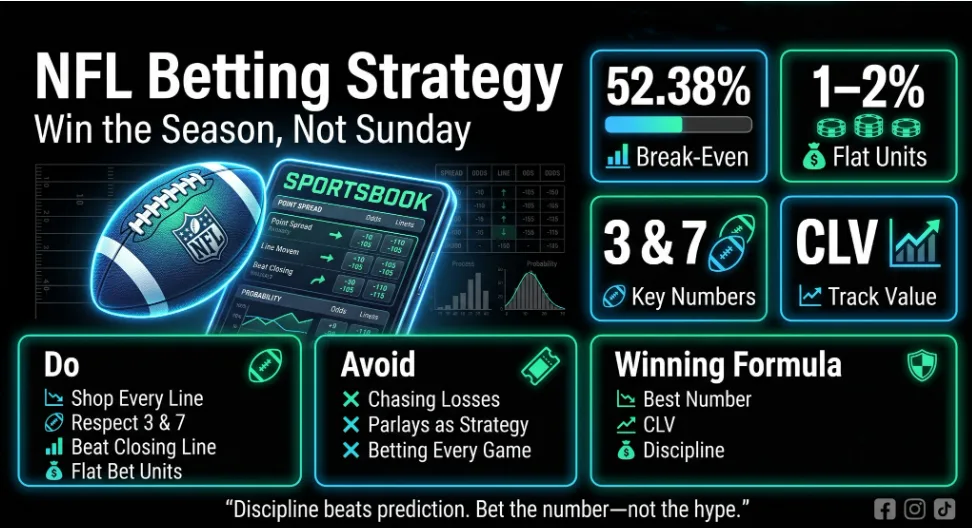
Winning bettors obsess over the price, not the team. The break-even rate at -110 sits at 52.38 percent, so the gap between a good season and a losing one is a handful of percentage points, and the cheapest way to close that gap is the number you bet. A pick is only as good as the line attached to it.
That is why line shopping is the single highest-ROI habit available. Accounts at three or four books mean you can take the same side at the best available price every time, and a half-point or a few cents of juice compounds across a season’s worth of bets. A spread bet on a 4-point favorite that pushes at -3.5 elsewhere is the difference between a loss and a refund. The edge is in the number, not the lean.
Pay Attention to the Key Numbers, Especially 3 and 7
NFL scoring clusters on specific margins, and the spread should be read against them. Points come in 3s and 7s, so final margins land on those two numbers far more than any others. Roughly 15 percent of games are decided by exactly 3 points and another 9 to 10 percent by 7, which makes the half-points around them the most valuable on the board.
The practical effect is that not all half-points cost the same. Moving from -3.5 to -2.5 crosses the most common margin in football and is worth far more than moving from -5.5 to -4.5, which crosses nothing important. A bettor who knows which numbers matter buys and sells the right half-points and stops paying for the ones that don’t. Secondary numbers like 6, 10, and 14 carry a smaller version of the same weight.
Closing Line Value Is How You Measure an Edge
Results lie over a short stretch, so the disciplined bettor tracks something steadier. Closing line value is the gap between the number you bet and the number at kickoff, and consistently beating the closing line is the strongest sign you are betting with a real edge. A bet placed at +4 that closes at +2.5 captured value whether or not it won.
The logic is that the closing line is the market’s sharpest price, set after all the money and information have moved it. Beating it repeatedly means your number was better than the final consensus, which is the definition of an edge in a market this efficient. Judging yourself by one week’s ROI rewards luck. Judging by CLV rewards process, and process is what survives a full season.
Bet Flat and Survive the Variance
Bankroll management is the discipline everyone praises but few find the patience to practice. Sizing each play at a fixed 1 to 2 percent of the bankroll means no single game can do real damage, and a cold streak becomes survivable rather than fatal. Flat betting the same unit every time beats nearly every escalating staking scheme for the typical bettor.
The reason is the variance baked into football. Even sharp bettors hit only 53 to 55 percent against the spread, which guarantees losing weeks inside a winning season. People who size like every game is a lock get wiped out by an ordinary bad Sunday, not by bad picks. Adjusting the unit to the current bankroll automatically shrinks bets during a downswing, which is exactly when protection matters most.
The Traps That Drain a Bankroll
Most losing seasons come from structural mistakes, not bad reads. Parlays are the most common, since each added leg increases the sportsbook’s hold, turning a string of fair bets into a high-variance, low-value play the house loves. Treating them as a core strategy is a slow bleed dressed up as a big-score chance.
Chasing losses is the faster killer. Doubling the stake after a bad beat to get it back is how a manageable downswing becomes a busted bankroll in a single afternoon. Betting your favorite team, forcing a play on every game, and buying steam after a line has already moved all belong on the same list. The fix for each is the same: fewer bets, flat sizing, and a willingness to pass.
Building the Season-Long Habit
A disciplined NFL approach is a set of repeatable habits, not a magic system. Shop every number across multiple books, respect the key numbers when you buy or sell points, track closing line value to know whether your process works, and bet flat units so the inevitable cold streak never ends your season. The goal is to make good prices, not to chase good feelings.
Smart Bet Insider tracks line movement, key-number value, and the spots where the market has mispriced a side across the full NFL schedule. Check the analysis before you lock a number you could have gotten cheaper somewhere else.
Frequently Asked Questions
What win rate do you need to profit betting NFL spreads?
You need to win 52.38 percent of your bets to break even on standard -110 spreads. Profitable NFL bettors typically land between 53 and 55 percent against the spread over a season, which still means losing 45 to 47 percent of the time. That narrow margin is why line shopping and bankroll discipline matter more than any single pick.
Why are 3 and 7 the most important numbers in NFL betting?
Three and seven are the most common final margins because NFL points are scored in 3s and 7s. Roughly 15 percent of games land on exactly 3 points and another 9 to 10 percent on 7, so half-points around those numbers carry far more value than elsewhere. Crossing from -3.5 to -2.5 is worth much more than crossing a number no games land on.
What is closing line value and why does it matter?
Closing line value is the difference between the line you bet and the line at kickoff. Consistently beating the closing line is the strongest indicator that you are betting with a genuine edge, because the closing number is the market’s sharpest price. Tracking CLV measures your process more reliably than a single week’s win-loss record.
How much of my bankroll should I bet on each NFL game?
Most disciplined bettors risk a flat 1 to 2 percent of their bankroll per play. Flat sizing ensures no single game can seriously damage your bankroll and that an inevitable losing streak stays survivable. Increasing bet size to chase a loss is the fastest way to go broke, even with a decent win rate.
Are NFL parlays a good betting strategy?
Parlays are generally a poor core strategy because each added leg increases the sportsbook’s hold. That compounding margin makes them a high-variance, low-expected-value play rather than a reliable way to profit over a season. Disciplined bettors stick mostly to single spreads and totals and treat parlays as occasional entertainment, not a system.